


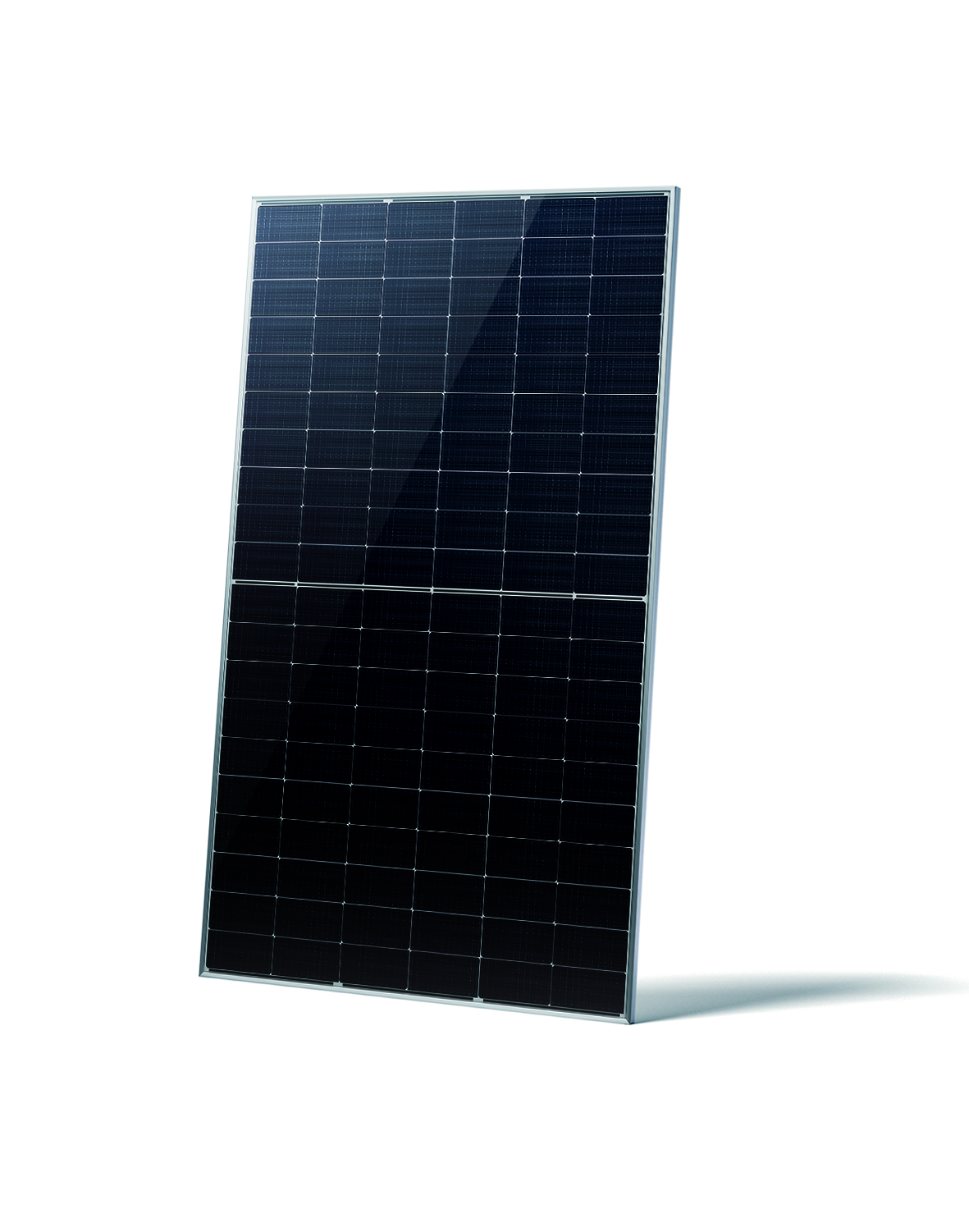
In stockIEC 61215:2021IEC 61730:2023
$199.99
Answer 8 questions and get an instant system recommendation with transparent, market-benchmarked pricing — before you ever create an account.
Get financing without a credit bureau inquiry. No hard pulls, no impact on your score, no surprises.
We source direct from manufacturers. Every product page shows our price vs. the market average so you can see the saving.
Bitcoin, Lightning Network, Ethereum, and USDC accepted. Prices lock for 15 minutes at checkout.
Order confirmed to installation-ready in 30 days. Your order tracker shows every stage in real time.
Factory-direct solar equipment — IEC, ETL and UL certified options available.
No solar knowledge required. No sales calls. No credit checks. Just a fast, transparent path to clean energy.
~2 minutes — no account needed
Answer 8 questions about your home, energy use, and backup needs. Our sizing engine calculates the right panel array, battery storage, and inverter for you.
Transparent, benchmarked pricing
See factory-direct prices alongside the market average. Every product shows its certifications, specs, and lead time. Add to cart as a guest.
Crypto checkout · 30-day timeline
Pay with Bitcoin, Ethereum, or USDC. Watch your order move through design, permitting, shipping, and installation — updated daily.
Factory-direct, in-stock, and ready to ship.
$199.99
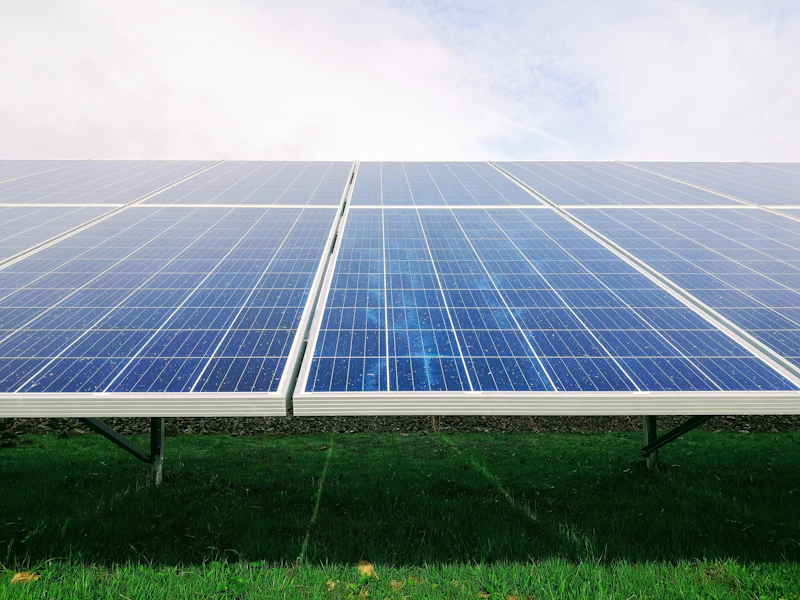
$219.99
“I got a complete system recommendation in under 3 minutes. The pricing was way below what my local installer quoted.”
James T.
Phoenix, AZ
“Paid with Bitcoin on a Sunday night. Order confirmed instantly, equipment arrived ahead of schedule.”
Maria L.
Austin, TX
“No one asked for my credit score. The system sizing matched exactly what my installer recommended after a site survey.”
David K.
Los Angeles, CA
UL certification (specifically UL 61730) means the product has been independently tested by Underwriters Laboratories — an OSHA-accredited NRTL — and verified to meet North American safety standards. Tests include mechanical load, hail impact, thermal cycling, humidity freeze, wet leakage, dielectric withstand, and fire class rating. ETL listing (Intertek) is fully equivalent. Most US utilities and AHJs require UL 61730 listing for grid-connected solar. All panels on SolarDirect carry current UL 61730 or ETL-to-UL 61730 listings.
UL 1703 was the original US solar panel safety standard (1980s). UL 61730 replaced it in 2019, harmonizing with IEC 61730 international requirements. Key changes: more rigorous fire testing with Class A/B/C ratings, stronger requirements for systems up to 1,500V, and more stringent humidity-freeze cycling. Panels with UL 1703 remain accepted by most AHJs. All new SolarDirect panels carry the current UL 61730 standard.
Four steps: (1) Calculate daily kWh — check your electric bill monthly kWh ÷ 30. (2) Find your peak sun hours — varies by location (Phoenix 6.5, Seattle 3.7, NYC 4.1 hrs). Our Wizard has data for 50 US cities. (3) Size your array: daily kWh ÷ peak sun hours ÷ 0.83 efficiency factor = kW needed. (4) Size battery: kWh needed × backup days ÷ 0.9 DoD for LiFePO4. The Wizard automates all of this.
MPPT controllers include a DC-DC converter to let panels operate at their true maximum power voltage, then step down to battery voltage — extracting 15–40% more energy than PWM in real conditions. PWM connects panels directly to the battery at battery voltage, wasting power when panel voltage exceeds battery voltage. Choose MPPT for systems over 300W, cold climates, or when panel Vmp differs significantly from battery voltage. Choose PWM only for very small systems under 200W with matched panel/battery voltage.
LiFePO4 outperforms lead-acid in every metric for solar storage: (1) Cycle life: 3,000–6,000 cycles vs. 300–500 for AGM. (2) Usable capacity: 90% DoD vs. 50% max for lead-acid — a 100Ah LiFePO4 gives 90Ah usable; a 100Ah AGM gives only 50Ah. (3) Round-trip efficiency: 95–98% vs. 80–85%. (4) Weight: 50–60% lighter. (5) Safety: LiFePO4 chemistry is thermally stable — no thermal runaway risk. Upfront cost is 2–3× higher but lifetime cost per kWh is 2–3× lower. All SolarDirect batteries are ETL listed to UL 1973.
In most US jurisdictions, yes — both a building permit and electrical permit for grid-tied systems. Off-grid systems often require only an electrical permit. Grid-tied systems also need a utility interconnection application before net metering is enabled. Our certified installers handle all permitting. If DIY, check with your local building department. Permit fees typically range $100–$500.
No account required. No credit check. See your equipment recommendation in under 2 minutes — free.
